This post is mainly just photos. Click on the images to see them bigger so you can read the writing. I find it strange that this tree has not taken over the world. It drops aerial roots which soon thicken up once rooted in the ground. The tree that walks. As you will see, a road will not stop it. What's more it is not really that old, compared with some of our ancient and big trees in the UK. The Botanic garden is run down, especially compared to similar places in England. Lucy and I had a great time and I would like to visit again, if the opportunity arises.
When watching this student cut out the shapes in this plank of wood, I was wondering where you could buy fretsaw blades 14 inches long, and how much they would cost. The blade broke and the young man had to make another blade.
I have seen the work produced by these saws and they will produce a good cut, obviously the better craftsperson you are the better the result. The frame is bent bamboo. The wire is just steel wire. I have made my own blades, and used them on my small frame saws.
This amazed me because of just how simple, assessable it was, and because it showed me, yet again, what could be made with materials around us. No need to rely on expensive consumables, or the latest highly designed tool. It also showed me that we can make our own tools. That also it is not something that needs years of training to do.
Do not get me wrong I love a well designed and made tool and I do have a few in my workshop. I also have lots of mass made tools of varying quality. These tools, with a bit of time and knowledge, can be made to work as well as any top line tool.
The Handicraft centre in Gangtok. Set up in 1957 to preserve and teach traditional Sikkimese crafts.
In the shop at the handicraft centre I bought a couple of beautiful hand cut and carved carvings. These are of traditional designs and painted.
The museum at the centre has the most amazing craft of Sikkim displayed in it. Photography was forbidden, unfortunately, as I would have loved to have shared some of the awe-inspiring artefacts I saw. It is well worth a visit if you are ever in Gangtok.
Very few people in the western world regularly use a ripsaw to convert timber these days, but it is still common practise in India. Pintso took Lucy and I up to the Buddhist monastery that was being rebuilt near his village, we passed these two men working in the jungle. They were hired to convert a load of trees that had grown up on an abandoned rice terrace. These planks were for a house just up the hill. When I say hill, I mean mountain, everything is either very steeply up or down.
This is a covered saw pit for when it rains
The sawyers stayed onsite for the duration of the works. Accommodation is a tarp each and a very uncomfortable looking sleeping platform, plus a few pots and pans etc.
The one thing that I noticed straight away when watching these sawyers work was the pace they worked. It was relaxed, and rightly so if you are spending days at the same job. The most interesting action that these craftsmen performed was that with every stroke they relaxed their hands. Watch the video and you will see this clearly. I think this is something that we should all take note of. When we learn something new we tend to tense up. This tension can become embodied and we never learn to relax properly. Over gripping or holding on too tight can obviously cause strains and injuries to our bodies, especially after years of doing it.
When using the push knife to make fan birds I grip it too tightly, this has become habit. I have to consciously relax my hands at the end of each push. To be honest this does not yet feel natural but I have to embody this new habit otherwise I could at some future date find I have damaged my hands. Watching the pace and how relaxed these guys are working, was a pleasure, as is watching anyone at the top of there game.
The planks never seemed to be stickered and I often saw planks left upright in the sun to dry. I shocked my hosts by saying that the wood that I saw being converted would take between 1 and 3 years to be seasoned and ready for use in the UK. Even more shock when I said that trees took between 50 and 150 years to grow before they were ready for felling.
Sikkim is a beautiful place, it is not perfect but they have policies in place that put some western countries to shame. No public smoking, and 6 months in prison if you use plastic bags. In Mangan we where given a type of donut on the ultimate in sustainable plates. I saw these plates in other parts of India as well as Sikkim, I also saw a lot of street food being served on fresh leaves. Being tropical, and sub tropical, plants grown so fast and in such abundance.
The plates are held together with a few thorns, they may not be, but that is what I thought they were. They are also made in huge quantities. I did a post on some wooden disposable plate a long time ago, but I think these are even more sustainable.
This sign is at the Sikkim border. The sign says " In Sikkim use of plastic bags and littering of plastic waste and materials is an offence". 5000 Rs is about £50. As aliens we had to get a 30 day restricted area permit, which we did in Bagdogra airport, to get through border control.
We in the developed western world seem to have a major fetish over our tools, a desire for spending huge amounts of money, and/or time on making or buying the best. To me, much of this is about buying status. The person who makes for a living often just makes a bench that works, as I certainly have over the years. The only requirement is that it functions. In India I only saw benches in towns and villages in roadside workshops, and I was intrigued by how most of them did not have a vice as we know it. If any one of us inherited one of those benches we would probably immediately chop it up for firewood. They are definitely not things of beauty and often are cobbled together with bits of wood. They function, as tools for holding wood to be planed or sawn. A lot of mortise work can be done on the floor.
I saw a lot of hand planing being undertaken, both surface, with 2 people, and jointing. The average length of board seems to be 7 to 8 feet.
Jointing large boards is done by placing the plank in a slot on the front of the table and locking it in place with a wooden wedge. This slot can also be used to help cut tenons and short rails.
Watching these guys sharpen was interesting, as most of them only seemed to have one stone, some of them were not particularly flat either.
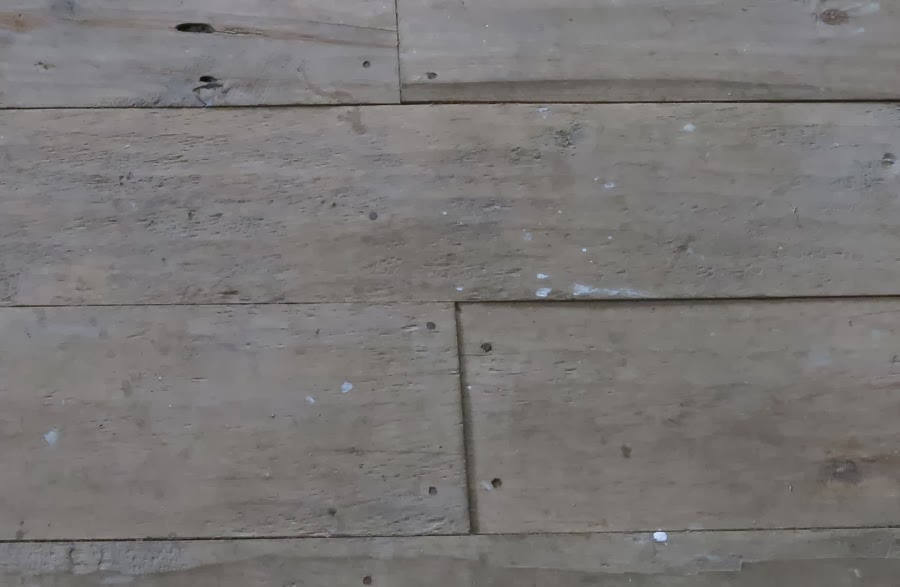
Most planes have quite a crown on them which produces a grooved cut, basically like a scrub plane. This can be seen on the floor boards above. One of the guest houses we stayed in at Dr Grahams was wooded throughout and you can still see the plane marks on the wood. It was apparent that if the grain direction changed in the wood that the planing direction just carried on, no turning the board around, and planing with the grain. So in a lot of the woodwork you could see chip marks in the wood, in the whole scheme of things it all looked great. I actually loved seeing the imperfections and the tools marks in the wood. It made everything feel authentic and real, it had been made by craftsmen, not machinists.
The workshops did not have many tools in, just the basics, but what came out of them was amazing. I am a great advocate of the "just do it" school of woodworking. As long as it functions then that's great. It is best that we learn techniques, and practise, rather than chase after that next tool.




 Posts
Posts


